THE DONCASTER MANSION HOUSE PORTRAITS 2: THE SALON & ELSEWHERE
The portrait information was prepared by Brian Barber, the former Archivist of Doncaster Council and author of A History of Doncaster.
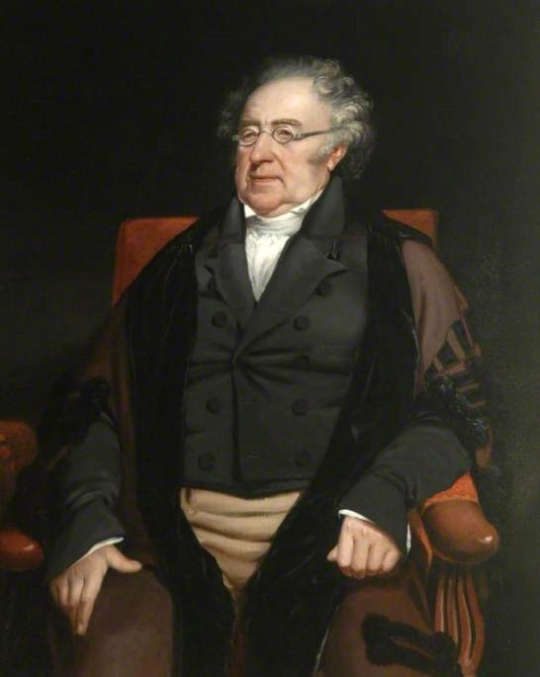
Joseph Lockwood
Subject Joseph Lockwood (about 1758-1837) was a member of a family who were stone masons and quarry-owners over several generations. He bought his freedom of the borough on 20 November 1794, when he was clearly already a man of some substance as the purchase cost him £21.
He became a councillor in December 1807 and, in 1821, an alderman. He was chosen as mayor in 1823 and again in 1832. He also acted as clerk and judge of the racecourse up to 1832, when he stood down in favour of his son.
He had extended the scope of his business in about 1814 by joining a partnership to take on the lease of the quarries at Levitt Hag which were owned by the Wrightson family of Cusworth Hall.
Painter Currently unidentified
History of the Portrait and Subject The plaque attached to the frame records that it was ‘Presented to the Mayor and Corporation of Doncaster October 1912 by the Great Granddaughters of the above [that is, Joseph Lockwood] in loving memory of their father Joseph Walter Day Lockwood, who past away 15th February 1909’. Two members of the Lockwood family achieved more than local distinction. Sir Frank Lockwood, whose portrait hangs in the Ballroom of the Mansion House, was the M.P. for York from 1885 to 1897 and Solicitor General from 1895 to 1896. His career is described in the commentary on his portrait.
Henry F. Lockwood (1811-1878), Joseph’s grandson, became a notable Yorkshire architect. He worked first in York and then in Hull. There he trained another Yorkshire architect, Cuthbert Broderick, later the designer of Leeds town hall, the Leeds corn exchange and the Grand Hotel in Scarborough. When in his later thirties, he entered a partnership with William Mawson.
Together Lockwood and Mawson became the leading architects in Bradford, where their designs included the town hall, St George’s Hall and the wool exchange. Commissioned by Sir Titus Salt, the manufacturer of alpaca cloth, they were responsible for the design of his model industrial village of Saltaire, near Bradford, with its huge textile mill, schools, chapel, houses and social facilities. The village is now designated as a World Heritage Site by UNESCO.
A twentieth-century descendent of Joseph Lockwood was Sir Joseph Lockwood, a businessman who was chairman of EMI (Electrical and Musical industries) for twenty years from 1954 to 1974.

Sir William Bryan Cooke
Subject Sir William Bryan Cooke of Wheatley Hall, eighth baronet (1782-1851).
Painter William Beetham (1809-1888), was born Doncaster, the son of a local family of wine and spirit merchants. He first exhibited at the Royal Academy in 1834 and continued to do so until 1853. Two years later, he and his wife and ten children immigrated to New Zealand, where he continued to paint with considerable success. He was the founder and first president of the New Zealand Academy of Fine Art in 1882.
History of the Portrait and Subject This, and two other portraits in the Mansion House, is associated with a major event in local government which took place in 1835. The government of the borough of Doncaster, and of 177 other long-established corporations in England and Wales, was fundamentally reformed by the Municipal Corporations Act of 1835. The Whig government, after reforming the parliamentary constituencies and the system of election to the House of Commons in 1832, turned its attention to local government. It abolished the system of self-selection employed by most of the old corporations, including Doncaster, and replaced it with election by the ratepayers. In Doncaster, this meant that the Tories, who had dominated the old corporation, were swept aside, and their places were taken by reform-minded men.
Cooke, a political reformer amongst the landed gentry, was chosen as the first mayor of the new regime in November 1835. His career on the council was short, lasting only three years. It was brought to a close in November 1838 after the death of his fourteen-year old daughter, Louisa, who had died in September. The portrait was painted at the request of the borough council after his resignation.
Cooke’s own death a dozen years later created a strong public response in the town and neighbourhood. Charles White, a bookseller in Baxtergate, organised the production of a mezzotint of the council’s portrait from the engraver Thomas Lewis Atkinson (1817-1898).This was to be sold to subscribers for 1 and 2 guineas, and 114 copies were subscribed for. A copy can be seen on-line on the website of the National Portrait Gallery.
The respect in which Cooke was held was made manifest in the memorial subscriptions that followed his death. The lesser subscription, which raised £360, was invested to buy books for prizes at Arksey school. Arksey was the parish for which the Cooke family owned the right of presentation of the vicar. They had their burial vault in the church, and had built almshouses for the poor in the seventeenth century.
Another subscription, which raised around £1,200, financed the design and making of a stained glass memorial window in Saint George’s church. This was to fill the west window and the work was carried out by William Wailes of Newcastle-upon-Tyne. He proposed the theme of the Tree of Jesse, (the family history of Christ) at a cost of £600. Installing it involved the relocation of the organ and the removal of the seating gallery which had been built in front of it.
The window was installed in November 1852. It was viewed by Benjamin and Mrs Disraeli in January of the following year, when they were staying with Richard Pemberton Milnes of Fryston Hall. The two-and-a-half hour visit – their train arrived at 12.55 and left at 3.40 – caused great interest locally, because Disraeli was both a well-known novelist and an exotic and rising star in politics. In the following month he became Leader of the House of Commons and Chancellor of the Exchequer, although only briefly on this occasion. Sadly, the new stained glass window survived barely a year for it was consumed in the great fire of 29 February 1853 which destroyed the church itself.
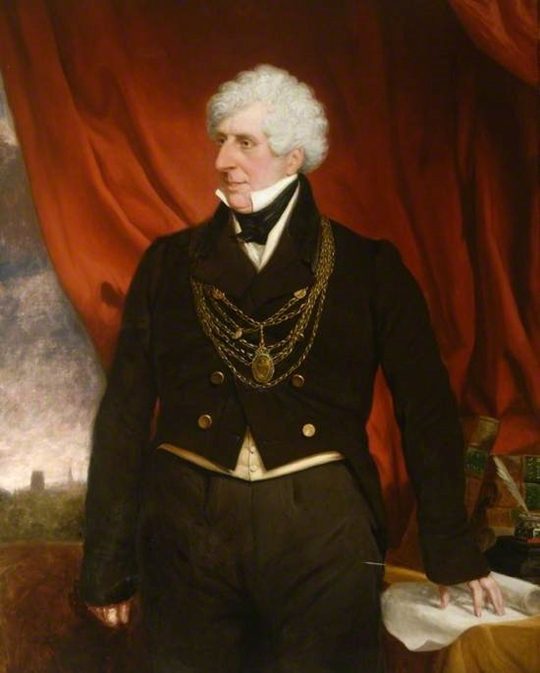
Frederick William Fisher
Subject Frederick William Fisher was an attorney and was town clerk (that is, principal officer) of Doncaster corporation from 1823 to 1835. He later returned to the council not as an employee but as a borough councillor and became mayor in 1848. He lived at Westfield House in Balby, a village, and later suburb, on the west of the town. The house was later demolished and the site and grounds redeveloped as Westfield Park.
Painter Currently unidentified
History of the Portrait Fisher became a freeman of the borough on 26 April 1821, for the then standard fee of 60 guineas (£63). He was elected a member of the council in July 1823 and in September of that year was appointed town clerk. He undertook the defence of the corporation’s record in the government of the borough in the local enquiry conducted by the government commissioner in 1834. This earned him the award of 100 guineas in a gold box from the corporation in January 1834.
This display of loyalty to the Tory corporation, however, was the cause of his dismissal once the reformed council convened at the end of 1835. He was replaced by T. B. Mason, whose portrait is also to be found in the Mansion House. Fisher launched a claim for compensation for loss of office, and the case dragged on for several years before Fisher was successful. In subsequent years, the political complexion of the council changed and Fisher was not only elected to the council but became mayor in 1848.

Thomas Blackwell Mason
Subject Thomas Blackwell Mason, an attorney and town clerk of Doncaster from 1835.
Painter Currently unidentified
History of the Portrait Mason became a freeman of the borough in October 1818 on the payment of a fee of sixty guineas (£63). He became a member of the corporation in December 1820. Mason was a supporter of political reform and so after local government was reformed in 1835, Mason was chosen to replace F. W. Fisher (who had held the post since 1823, as town clerk. This portrait, commissioned, as it reads on the frame, by his ‘Friends and Townsmen’, was presented on 15 October 1856.

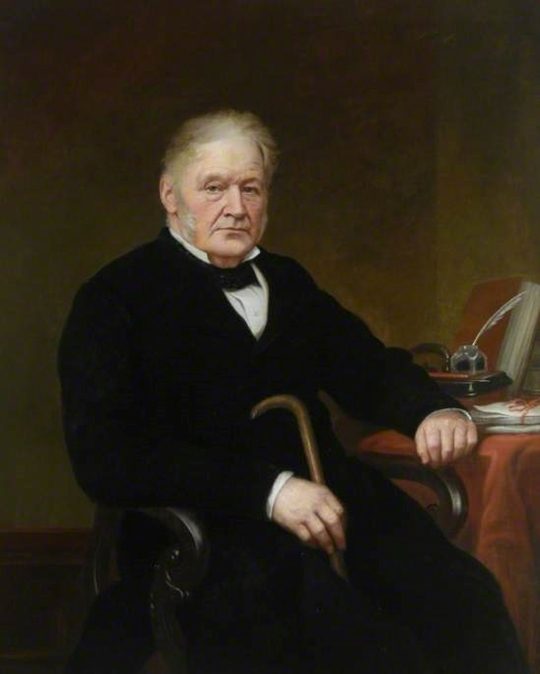
Sir Edmund Beckett
Subject Sir Edmund Beckett, 4th Baronet (1787-1874) who, between 1814 and 1872, used the surname of Denison. He was a younger son of the Beckett family of Leeds, who were the owner of a major Yorkshire bank. Its headquarters were situated on Park Row in Leeds, and feature in a characteristic moonlight painting by Atkinson Grimshaw, now in Leeds City Art Gallery. Beckett’s bank amalgamated, with its 37 branches, with what is now the National Westminster Bank in 1921.
Beckett was one of the two M.P.s for the West Riding county constituency from 1841 to 1859. From his marriage in 1814, Sir Edmund used the surname of Denison. He had adopted this in order to receive an inheritance from Sir Thomas Denison, a judge who was a relation of his wife. He reverted to his original Beckett surname in 1872 in order to inherit the Beckett family baronetcy. He did this, however, only when he had obtained a legal opinion that he would not forfeit the inheritance he gained from changing his name to Denison 58 years earlier. He settled in Doncaster, in a house in South Parade, in 1818 where he lived until his death. He is buried in the graveyard of the nearby Christ Church.
Painter currently unidentified
History of the Portrait and Subject The plaque attached to the frame records that ‘The sitter was an inhabitant of this town for 56 years and in various ways a benefactor thereto’. Beckett indeed had a major impact upon Doncaster, his adopted town. In 1835, frustrated by the scheming of George Hudson, the York-based railway developer, in his hopes of linking Doncaster to the emerging railway system, Beckett became a leading promoter of the Great Northern Railway.
This hugely ambitious scheme aimed to provide an east-coast main line to join London and York by way of Doncaster. After a long and very expensive parliamentary contest, organised by Hudson, the promoters succeeded in obtaining parliamentary approval in 1845. Denison, at that time vice-chairman of the company, took over the chair in 1849 and remained in post until 1864. The first GNR station in Doncaster opened at the end of August 1848.
Of even greater significance for the town was Beckett’s determination to locate the company’s locomotive works in Doncaster. He succeeded despite the scepticism of the company‘s engineers, who preferred Peterborough. The works opened in 1854, and the character of Doncaster began to change from a genteel county town to a busy, populous industrial centre.
The portrait seems to be taken not from life but from a photograph in which Beckett sits in typical pose with his walking stick. The picture was presented to Doncaster by his son, Edmund Beckett-Denison (1816-1905), a barrister and parliamentary counsel, created first Baron Grimthorpe in 1886. Beckett was described as: ‘brusque in his manner, with little trace of sentiment or poetry of any description’, by the Doncaster Chronicle in its obituary and a strong, forthright personality is clearly conveyed by this portrait.
Like several of the men who feature in the Mansion House portraits, Sir Edmund Beckett is also associated with a horse. In this case it was not a racehorse but a horse known to be a troublesome mount. In June 1850 Beckett loaned the horse to Sir Robert Peel. Sir Robert had led the Conservative Party – which was virtually his creation – as Prime Minister from 1840 until 1846. Riding in Green Park in London, the horse stumbled, Peel fell and the horse crushed him. Peel died three days later from his injuries.
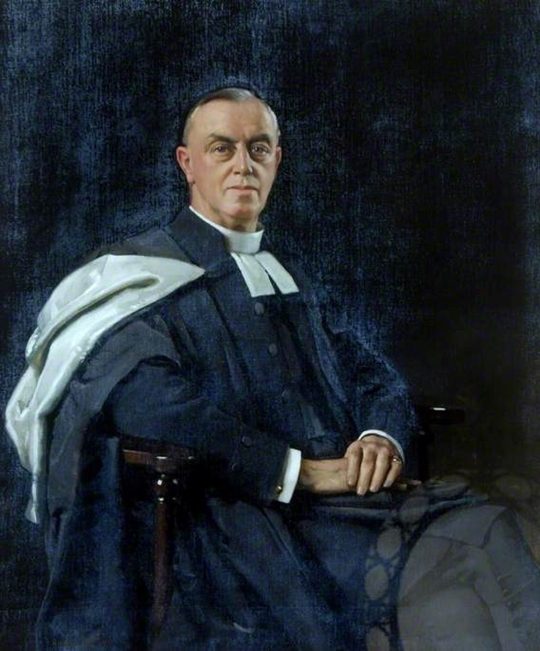
Venerable George Folliott Sandford
Subject The Venerable Folliott George Sandford (1861-1945), Church of England clergyman who became a long-serving vicar of St George‘s church, Doncaster.
Painter Richard Jack (1866-1952), a Sunderland-born artist and Royal Academician. He became an official Canadian War artist in 1916 and emigrated there in 1928. Of the four dozen works by him in British galleries, more than a quarter, including this one, are of Yorkshire people or landscapes.
History of the Portrait and Subject The plaque attached to the frame records that it was ‘Presented by the Townspeople of Doncaster in grateful appreciation of eminent and devoted services for the moral and spiritual welfare of the town and on completion of twenty one years as vicar of Doncaster and Chaplain to the Corporation 26th July 1927’.
Archdeacon Sandford was born in Sheffield. He became and Anglican priest and began his clerical carer as a curate at what was then Sheffield parish church, which in 1913 became the cathedral. He progressively ascended the church’s ladder of promotion, moving from Sheffield to York, back to Sheffield, then to Huddersfield, and finally to Doncaster in 1905, where he became the vicar of St George’s church. Doncaster became his base for the remainder of his life. In 1910, he became rural dean of Doncaster and in 1913, on the creation of the Sheffield diocese, the archdeacon of Doncaster, one of the two archdeacons of the new diocese. In the same year, he became chaplain to the corporation. He retired from both positions in 1941 and died at the age of 84 four years later. He was, as characterised by a colleague: ‘quick; quick in thought, speech and temper’. Likewise as a motorist, as his driving was described by one passenger as ‘hair-rising’.
George Thomas Tuby
Subject George Thomas Tuby (1857-1932), owner of fairground entertainments and member of Doncaster borough council from 1896 to 1929.
Painter Alfred Priest (1874-1929), a member of the Royal Society of Portrait Painters and exhibitor at the Royal Academy. There are nine other portraits by Priest in public collections in Britain. In his own time, he attracted considerable public attention through the exhibition of two ‘problem’ paintings, at the Royal Academy, ‘Cocaine’ in 1919 and ‘The Strike Weapon’, in 1929.
History of the Portrait and the Subject George Tuby was first elected as a councillor for St George’s ward in Doncaster in 1896. He was elected an alderman in 1913 and mayor in 1921. He served on the council until his death in 1932. However, it was not for his career in local government that he was well-known.
He began life as the son of a worker at Doncaster railway plant works and, after a series of indifferent jobs, turned to the business of providing amusements at town and village fairs. He ran coconut shies, moved on to swings and then, in 1887, to steam-driven roundabouts with model horses and, as early as 1907, replica motor cars. Then he introduced the ‘bioscope’ or mobile cinema to wondering fairgoers. He prospered, but did not forget what would have been called his lowly origins and was conspicuous in raising funds for charities throughout the region. The portrait was presented by the Showmen’s Guild and is dated as 1922.
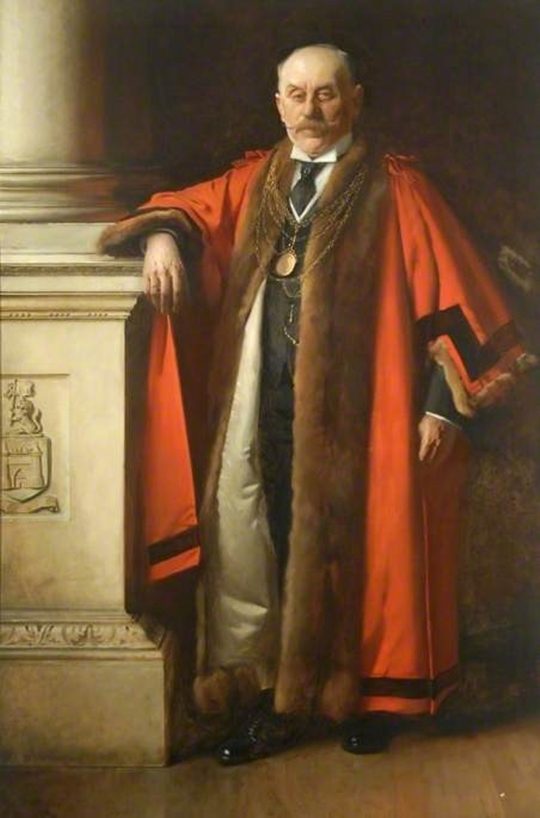
King Edward VII
Subject King Edward VII (1841-1911) in his coronation robes. Edward VII was the eldest son of Queen Victoria and Albert Saxe-Coburg-Gotha, Prince Consort. He was crowned in August 1902, after the ceremony had been postponed to allow the king to be operated on for appendicitis.
Painter The original was painted by Lance Caulkin (1859-1936). The name of the copyist is currently unknown.
History of the Portrait and Subject The portrait was given to Doncaster by the third Viscount Halifax in March 1934, shortly after succeeding his father, the second Viscount. He was the grandson of Sir Charles Wood of Hickleton Hall, and M.P. for Halifax, who had encouraged Doncaster corporation to obtain a copy of the Winterhalter portrait of Queen Victoria in 1864.
The third Viscount was subsequently foreign Secretary in Neville Chamberlain’s government, and was a supporter of the government’s policy of ‘appeasement’ as an answer to German aggression under Hitler before 1939.
The second Viscount had held an appointment in the king’s household (as groom of the chamber from 1862 to 1873) when he was Prince of Wales, but the king himself also had associations with Doncaster, one of which he would come to regret. This was the consequence of his indulgence in one of his more decorous and more public leisure activities, which was his attendance at race meetings. As Prince of Wales, he was a regular attendee at the Doncaster racecourse from 1876, on the 100th anniversary of the St Leger, a quarter of a century before he ascended the throne.
On that occasion he was the houseguest of one of his more foolish boon companions, Christopher Sykes, a younger son of the Sykes family of Sledmere. The family‘s wealth had originated from their origins as cloth merchants in Leeds in the seventeenth century. Christopher Sykes himself lived at Brantinghamthorpe Hall, near Brough in the East Riding of Yorkshire.
The prince had first visited the house in 1869, and returned on several occasions thereafter. Sykes rebuilt the house and redesigned the grounds, which latterly included a ‘royal walk’ of Wellingtonia trees planted by the Prince of Wales and other members of the royal family. Sykes’ extravagance later led him into severely straightened circumstances. The house was let out to new tenants in 1889, and the prince was obliged to look for other hosts for his visits to the September race meetings. In 1890, his attendance at the races led to one of his few misdemeanours to receive wide publicity.
In that year he was a guest of a Hull shipping magnate, Arthur Wilson and his wife, at their mansion called Tranby Croft, at Anlaby, near Hull. The Prince was accompanied by a number of his courtiers. Amongst the diversions of the house party were card games. One of these was baccarat. This, as a game of chance rather than skill, was then illegal if bets were taken on the outcome. In the seclusion of a private house this would have caused no scandal, but one of the players, a lieutenant-colonel in the Scots Guards, was accused of cheating. He in turn brought an action for slander against his five accusers.
As one of those engaged in the game, and also in the investigation of the accusation, the Prince was called to the witness box at the trial. The revelations of the witnesses, followed by a supposedly biased summing-up by the judge, led to verdict given against the accuser. It also led to his immediate ostracism by high society. These were the ingredients of the so-called Tranby Croft scandal, which reverberated for some time thereafter.
Not surprisingly, the court case had repercussions for the Wilson family as well. The racecourse records held by Doncaster Archives include the register of the private boxes hired at the grandstand. This shows that Arthur Wilson hired a box for the attendance at the 1890 race meeting, but not in the following year. As memories of the affair subsided, the Wilsons resumed their house parties for guests attending Doncaster races.
When he became king, Edward VII returned to attending the racing in Doncaster. It was said that he routinely bought a race card from an elderly lady called Kate, who received a sovereign from him in exchange. On these occasions his host was Lord Savile of Rufford Abbey, Nottinghamshire, where the house party routinely included Mr and Mrs Greville, a celebrated Edwardian hostess and, the king’s mistress, the Hon. Mrs George Keppel, the grandmother of Camilla, Duchess of Cornwall. It was such occasions that led the social envious to refer to the king’s companions as ‘the Civils and the Grovels’.
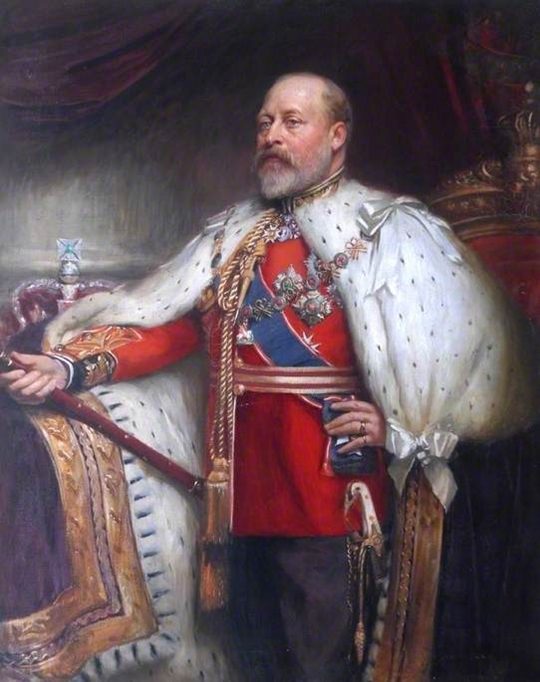
Queen Alexandra
Subject Queen Alexandra (1844-1925), the consort of Edward VII, whom she had married in March 1863. She was the daughter of King Christian IX of Denmark. Her sister, Dagmar, was the Tsarina, the consort of Tsar Alexandra III of Russia.
Her portrait here is not a companion piece to that of Edward VII as she is not dressed in her coronation robes nor wears a state crown. She is dressed in mourning, presumably for Queen Victoria.
Painter Currently unidentified
History of the Portrait Like that of Edward VII in the Mansion House, this portrait was given to Doncaster by the third Viscount Halifax in March 1934, shortly after succeeding his father, the second Viscount.

Second Viscount Halifax
Subject Charles Wood, second Viscount Halifax (1839-1934). He had been groom of the chamber to the future Edward VII when Prince of Wales, from 1862 to 1873.
Painter Rene le Brun, Comte de l’Hopital (1877-1929), the son of the Duc de Viry. He had studied at the Royal Academy schools and had married Winefride Bentley. She was the daughter of J. F. Bentley (1839-1902), the architect of Westminster Cathedral. This celebrated late Victorian architect, who designed Westminster Roman Catholic cathedral, was born in Doncaster in 1839. He had taken the first steps in his career by working as a volunteer on George Gilbert Scott’s restoration work at the parish church of St Katherine, Loversall.
History of the Portrait and Subject The plaque attached to the frame records that the portrait was ‘Presented to the Corporation 1937 by the Widow of the Artist R. de P. l’Hopital’.
His career, when compared to those of his father and of his youngest son, (the third Viscount) seems inescapably muted. He was a fervent Anglo-Catholic and spent much of his life fruitlessly fostering relations between the Anglican and Roman Catholic Churches. Locally, he was responsible for building the reinforced concrete parish church of St John and St Mary Magdalene at Goldthorpe, close to his family seat ay Hickleton Hall.
The Wood family originated in Monk Bretton, and were well-established there by the beginning of the seventeenth century. When the family purchased Hickleton Hall in 1828, they had acquired a baronetcy. By the time his father, the forty-eight year-old Charles Wood inherited the house and title in 1846, he had become a leading Whig parliamentarian, sitting in the House of Commons from 1842 to 1866. For virtually all that time was MP for Halifax. He first held political office in 1832 and thereafter served in many governments over the next forty years, up to 1874. He was Chancellor of the Exchequer from 1846 to 1852.
When Charles Wood the elder was given a peerage in 1866 he chose the title of Viscount Halifax of Monk Bretton. Like many aristocratic Whig families, including the fourth Earl Fitzwilliam, the second Viscount broke with Gladstone and the Liberal Party over the issue of Home Rule for Ireland and joined the Liberal-Unionists who gradually moved into close alliance with the Conservative Party.
His grandson, the third Viscount Halifax had a distinguished career in Conservative politics, as Viceroy of India between 1926 and 1931 and Ambassador to the USA from 1941 to 1946. Unfortunately, his achievements are overshadowed by the three years he spent between 1938 an 1940 as Neville Chamberlain’s Foreign Secretary when he was foremost amongst those in favour of appeasing Hitler.
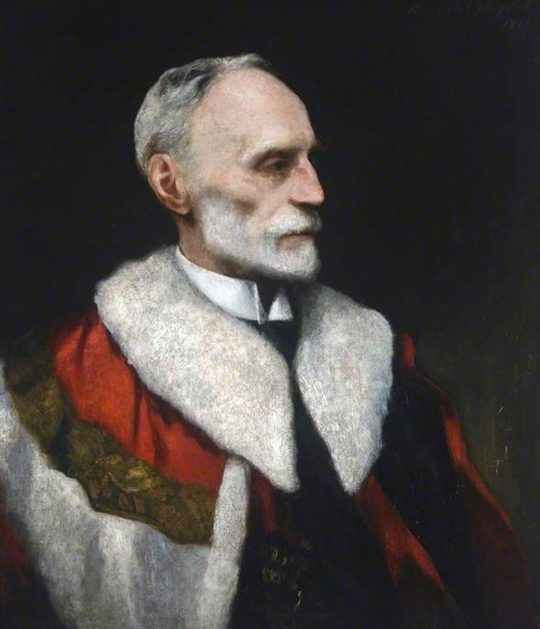
Queen Elizabeth II
Subject Queen Elizabeth II (born in 1926), elder daughter of King George VI and Queen Elizabeth, succeeded to the throne in 1952.
Painter Leonard Boden (1911-1999). The artist was the son of a Clydeside businessman who chose to become an artist rather then enter the family firm and studied at the Glasgow School of Art. He became a portrait painter in the 1950s and was elected to the Royal Society of Portrait Painters. He was the portrait painter of choice for Elizabeth II, and Doncaster possesses one of the portraits of the Queen which the he completed.
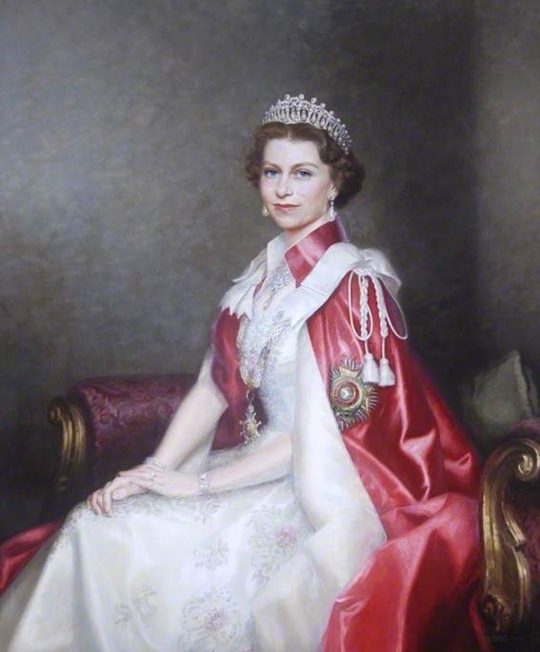
Queen Elizabeth, the Queen Mother
Subject Queen Elizabeth, the Queen Mother (1900-2002), the widow of King George VI (1895-1952) and mother of Queen Elizabeth II (born in 1926).
Painter Norman Douglas Hutchinson (1932-2010), the Anglo-Indian son of Honourable Eric Douglas, the younger son of a Scottish peer. Raised in an orphanage, his talent attracted the patronage of Lady Mountbatten, the Vicerene of India. He had built up a successful engineering business before devoting most of his time to practising successfully as a portrait painter.
History of the Portrait The portrait was painted in 1985.

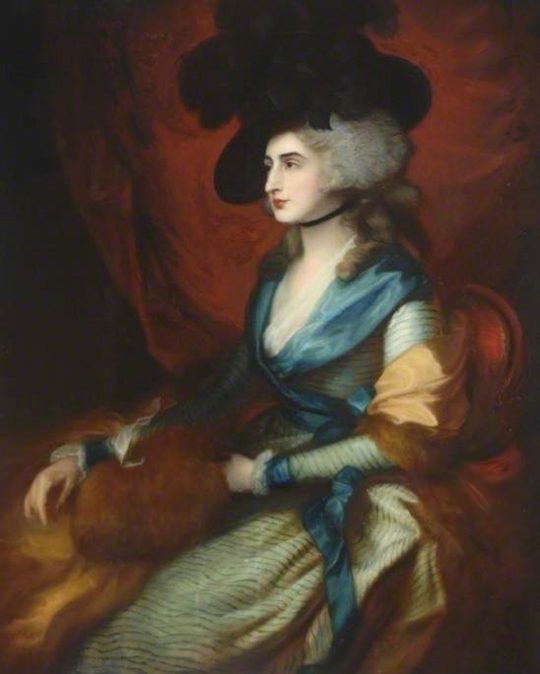
Sarah Siddons
Subject Sarah Siddons (1755-1831) was a member of the Kemble family and, like a number of family members, was a prominent figure on the stage in the late eighteenth and early nineteenth centuries. When not performing in London or Dublin she toured the provincial theatres. In Yorkshire, the dominant figure in theatrical touring was Tate Wilkinson. Mrs Siddons often appeared in his company. She last acted in Doncaster, in the corporation-owned theatre in the Market Place, in October 1811, in Hamlet.
Painter The original portrait is by Thomas Gainsborough (1727-1788), painted in 1785. It was purchased by the National Gallery in 1862. The painter of this copy is currently unidentified.
History of the Portrait The portrait was a bequest by Robert Stockil (whose portrait hangs in the Ballroom of the Mansion House) to the Doncaster School of Art. It was later transferred to the Mansion House.
Portrait of a Seated Gentleman
Very little is known about this painting. Brian Barber (in his article for the Yorkshire Archaeological Journal 2023 , entitled Doncaster Mansion House Portraits: A Pictorial Tour ) , speculates that as the unidentified sitter is wearing a black gown he may have been a town clerk. If so, the likely candidate is George Broderick (c.1732–1815), town clerk for thirty-six years from 1778 to 1814.
Painter Currently unidentified.
Oil on canvas 91.5cm by 71cm. The painting is contained within its original late Victorian gilt plaster frame